An inside-out approach to workplace development from Jasmine Mohidin, Registered Industrial and Organisational Psychologist.
Do you believe more could be achieved?
You may see it in yourself.
Or you see it in the people you lead.
Perhaps you see it across your organisation.
There is potential.
But there is also a gap between that potential and current performance.
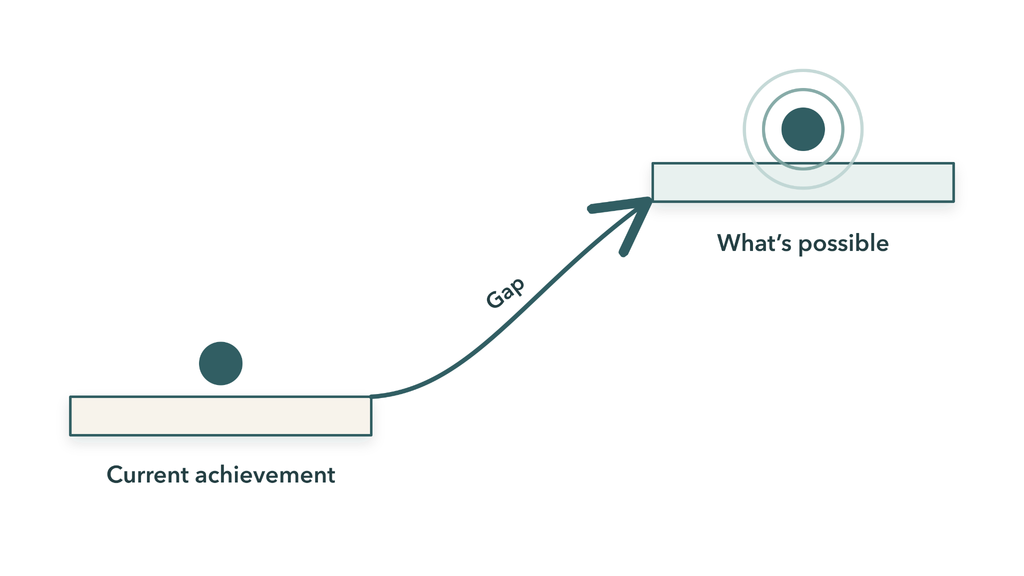
And that gap can be frustrating.
So we try to close it.
We learn more.
We acquire qualifications.
Develop technical skills.
Attend courses.
Send people on training programmes.
Introduce new systems, methodologies and technologies.
Today, we even have AI tools that promise to help us do more.
All of these things can help.
But they have something in common.
They largely focus on what we can add: more knowledge, more skills, better tools, better systems.
And yet knowing more doesn't automatically mean performing better.
Having better tools doesn't necessarily mean making a greater contribution.
Because ultimately, knowledge, skills and tools still have to be applied by a person.
Closing the gap between performance and potential requires more than skills, knowledge and better tools.
It requires developing the person doing the work.
More could be achieved
A graduate has knowledge, ambition and the qualifications to begin.
More could be achieved if they could turn what they know into confident contribution.
A committed employee works hard but is pulled between competing demands.
More could be achieved if they had the focus and space to direct their effort where it matters most.
An experienced specialist has valuable expertise but struggles to influence decisions beyond their immediate area.
More could be achieved if they could translate their expertise into wider organisational contribution.
A capable manager keeps taking work back from the team and becomes increasingly overloaded.
More could be achieved if they could create the conditions for others to exercise judgement, take responsibility and grow.
Sometimes, the gap only becomes visible when behaviour is observed in practice.
Let’s look at an example from a development workshop run by Jasmine:
A manager took part in a fictional workplace role-play.
Jasmine played the role of the other person.
She disclosed a recent personal loss, but the manager continued to focus on the technical issue without even acknowledging what had been said.
In the feedback conversation, he maintained that he was an empathetic person.
Yet he could not understand why members of his team experienced him as cold and aloof.
The issue was not that he lacked knowledge about empathy.
He understood the importance of empathy, but that understanding did not translate into his behaviour when it mattered.
Development can help close the gap between knowing what to do and putting that knowledge into practice.
These are not necessarily problems of ability, commitment or knowledge.
And they cannot always be understood by looking at the individual alone.
Workload, expectations, culture, resources and opportunity matter too.
But each example points towards the same possibility.
More could be achieved if we developed the person doing the work.
So what, exactly, does that involve?
Developing the person doing the work
It means paying attention to three connected areas:
- How we manage ourselves.
- How we manage our relationships with others.
- How we manage our work.
These areas do not operate independently.
How we manage ourselves shapes how we relate to others.
Those relationships influence how work gets done.
And the demands of work continually affect both the person and their relationships.
When these three areas come together, something else begins to emerge.
Impact.
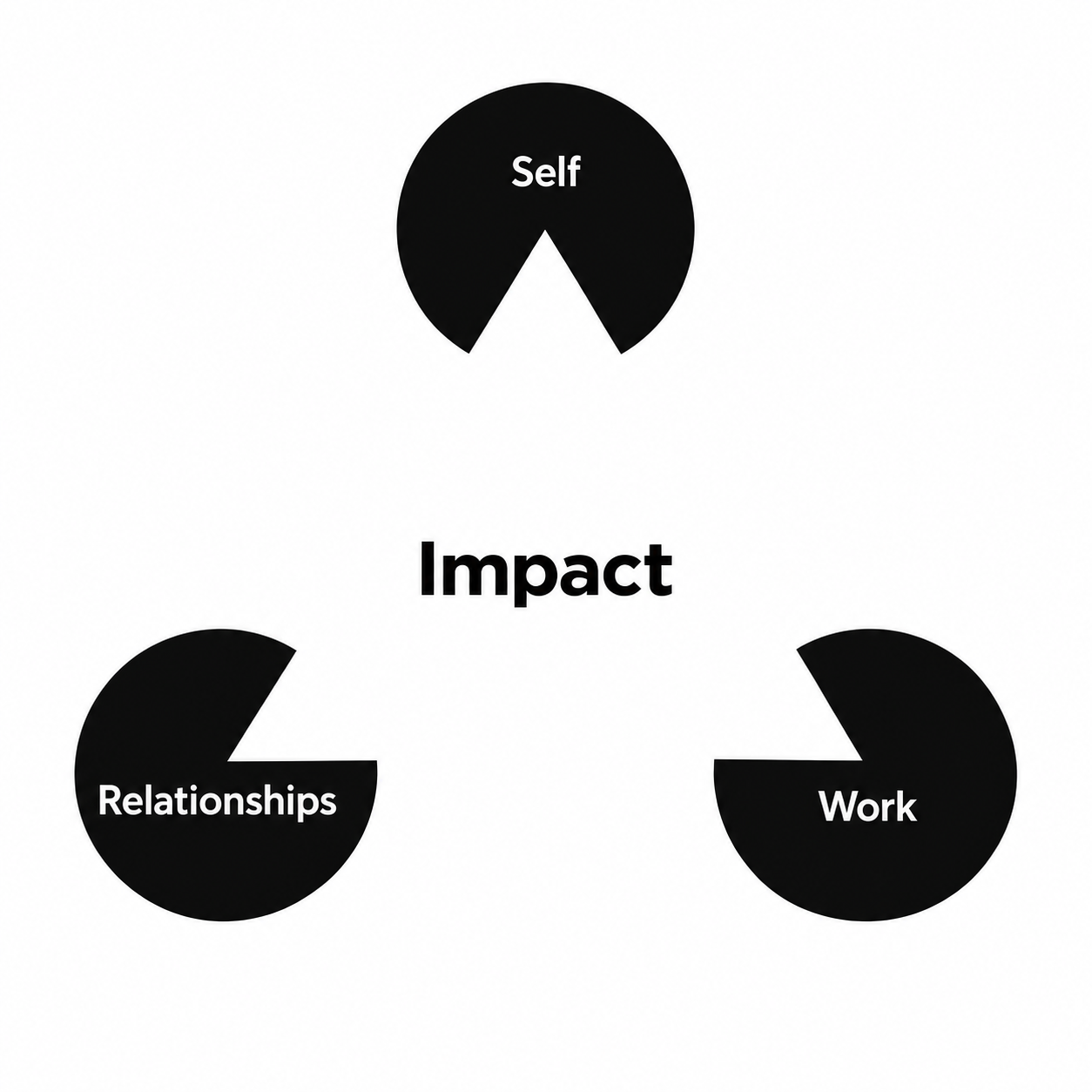
Look at the image above.
You probably see a triangle.
But the triangle has not actually been drawn. It emerges from the relationship between the other shapes.
We think about impact in much the same way.
Impact is not simply another area to develop in isolation. It emerges from how we manage ourselves, our relationships and our work.
It is expressed through the contribution we make to our organisation and, through our work, to society more broadly.
Together, Self, Relationships and Work form the Inside-Out Development Framework.
They describe what we develop in the person doing the work.
Where might you recognise this?
You may recognise it in yourself.
You know you are capable of more, but something in the way you manage yourself, your relationships, your work, or the conditions around you is affecting the contribution you are able to make.
You may recognise it in someone you support or lead.
They have ability, knowledge and commitment. But they may need more than another course, a better tool or greater pressure to perform.
They may need the opportunity to develop how they apply what they know in real working situations.
Or you may recognise it across a team or organisation.
Capable people are working hard, yet familiar patterns continue to affect communication, collaboration, judgement, accountability or execution.
These patterns do not necessarily mean that people are unwilling or unable to contribute.
They may point to a different question:
What are we trying to solve with more training, better tools or greater effort that may require us to develop the people doing the work?
Because when people develop how they manage themselves, their relationships and their work, more of their potential may become visible in the contribution they make.
Potential is not a destination
We often speak about “reaching your potential” as though potential were a fixed destination.
We see it differently.
Development may help close the gap between what someone is achieving now and what they are already capable of achieving.
But it may also expand what becomes possible.
As people develop greater awareness, build capability, practise new ways of working and receive the right support and opportunities, their capacity to adapt, lead and contribute may grow.
In the workplace, that growth has two perspectives.
People naturally have goals of their own.
They may want to earn more, progress in their careers, find more meaningful work or create new opportunities for themselves.
Organisations also employ people because their contribution is needed to achieve something larger.
These goals need not conflict.
But they do not align automatically.
Development can help people connect their own growth with the contribution their role asks them to make.
It can help them see how becoming more effective in themselves, their relationships and their work enables both personal and organisational progress.
For an organisation, developing people is therefore not only about addressing today’s performance gaps.
It is also about building the capacity the organisation may need to adapt, perform and achieve its goals in the future.
Potential needs a plan
Development requires more than intention.
It becomes purposeful when we understand the current reality, create the right opportunities and pay attention to what changes.
If the Inside-Out Development Framework describes what we develop, A.I.M. provides a way to approach that development:
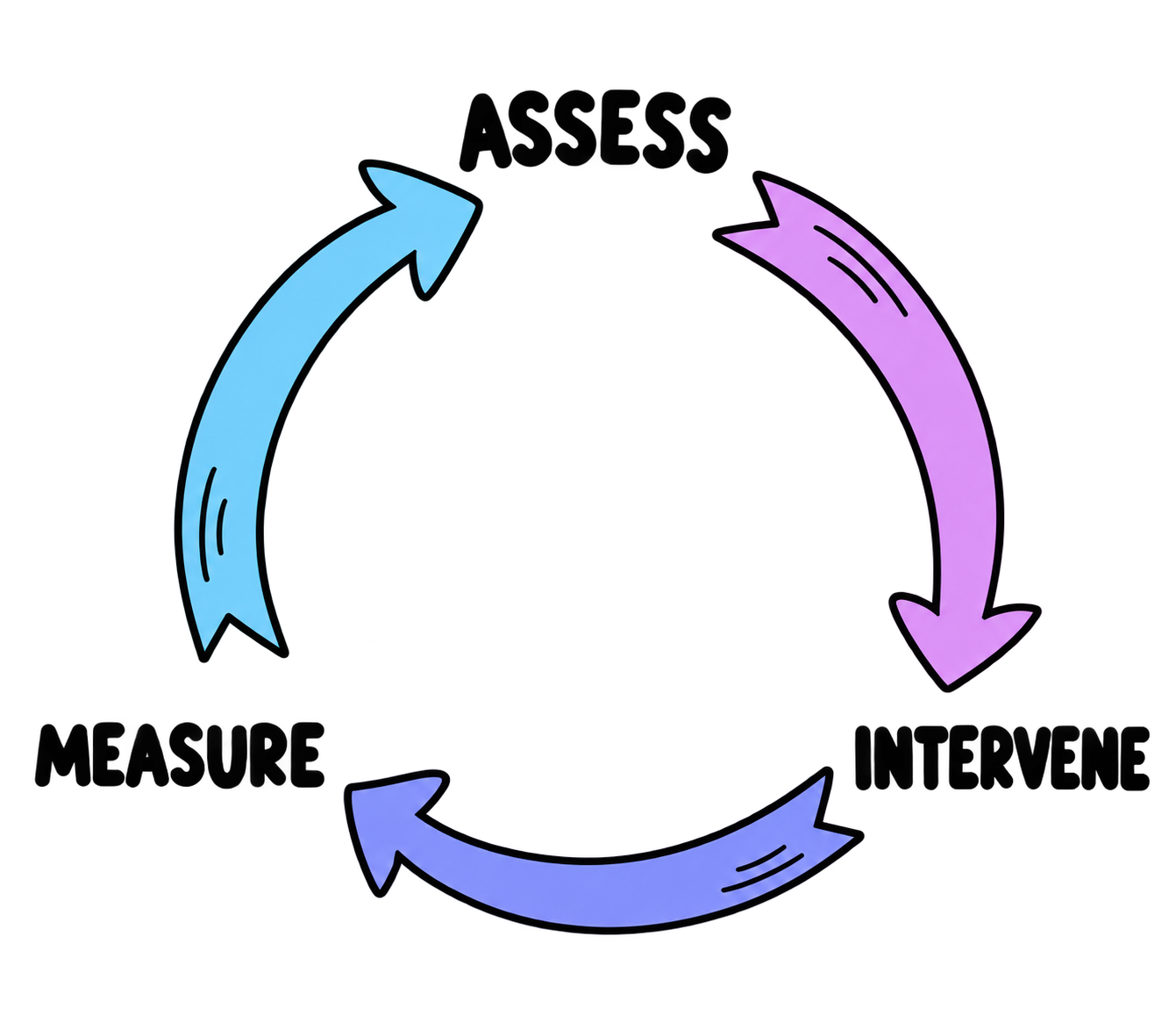
Assess. Intervene. Measure.
Assess to develop a clearer understanding of the person, the work and the context.
Intervene to create opportunities for learning, reflection, practice and application.
Measure to consider what is changing, what is being applied and where further development may be needed.
A.I.M. is not a rigid, one-size-fits-all formula.
It keeps development intentional, practical and connected to meaningful contribution.
What more could be achieved?
Knowledge, skills, tools and systems all matter.
But their value ultimately depends on how people apply them, and on how they manage themselves, their relationships and their work.
For an individual, development may help turn greater awareness and capability into more intentional contribution.
For an organisation, developing people may help more of the potential already present become visible in the way people communicate, decide, collaborate, lead and work.
So the next question is not simply:
What more do people need to know?
It is:
What might become possible if we developed the people doing the work?
That question cannot be answered fully on a single page.
The Inside-Out Development Framework grew from Jasmine Mohidin’s work across education, workplace development, assessment, talent management and coaching.
It offers a way to continue exploring how Self, Relationships and Work come together to shape the contribution people make.
Whether you are thinking about your own development, someone you support or lead, or the people across your organisation, you are invited to continue the conversation.
On the next page, you can decide whether you would like to explore the framework further.
It is a place to begin.